Nutrition
Chana dal glycemic index: why it is one of the lowest-GI foods tested
Glycemic index measures how fast a food raises blood sugar. Boiled chana dal has tested among the lowest of any food. Here is what that means on a real plate.
Key takeaways
- Glycemic index (GI) ranks carbohydrate foods by how quickly they raise blood glucose, against pure glucose at 100.
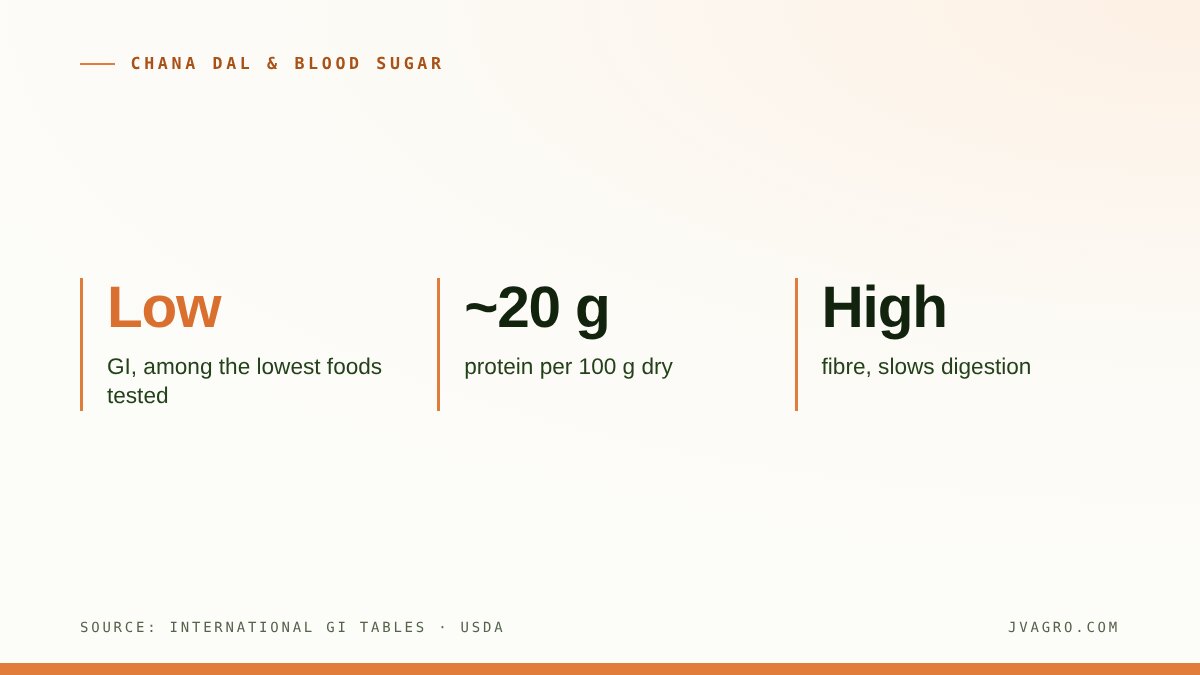
- In the International Tables of Glycemic Index, boiled chana dal has tested among the lowest values of any food, far below rice or wheat roti.
- Its protein, fibre and slowly digested starch explain the low GI.
- Low GI is helpful, not magic. Portion size and the rest of the plate matter just as much.
"Is chana dal good for diabetes?" is one of the most searched food questions in India. The honest answer is that chana dal is one of the better carbohydrate foods for steady blood sugar, and there is solid research behind that, but it works as part of a balanced plate, not as a cure.
What glycemic index means
GI compares how much a portion of food containing a fixed amount of carbohydrate raises blood glucose, against the same amount of pure glucose, which is set at 100. Foods are broadly grouped as low (55 or less), medium (56 to 69) and high (70 or more).
Where chana dal stands
In the International Tables of Glycemic Index compiled by researchers at the University of Sydney, chana dal (split Bengal gram), boiled, has been recorded among the very lowest values of any food tested, in the low range and well below 55. Whole chickpeas also test low. Polished white rice and many wheat breads test medium to high.
| Food | Typical GI range |
|---|---|
| Chana dal, boiled | Low, among the lowest recorded |
| Kabuli chickpeas, boiled | Low |
| Toor and other dals, boiled | Low |
| Whole wheat roti | Medium |
| White rice, boiled | Medium to high |
GI values vary with variety, processing, cooking time and what else is eaten. Ranges summarise published tables; individual responses differ.
Why chana dal digests slowly
- Protein: about 20 g per 100 g of dry chickpea, which slows stomach emptying.
- Fibre: both soluble and insoluble fibre.
- Starch structure: much of the starch in pulses is slowly digested or resistant to digestion.
How to use chana dal on a real plate
- Swap, do not just add: replace part of the rice or roti with a bigger bowl of dal.
- Cook it soft but whole: very long cooking to a paste can raise GI somewhat.
- Add vegetables: chana dal with lauki, spinach or other vegetables adds fibre and volume.
- Watch the fat: a heavy ghee tadka adds calories without changing the GI story.
- Count portions: a low-GI food in a large portion still adds up.
This is general information, not medical advice. If you have diabetes or prediabetes, plan your diet with your doctor or a registered dietitian, especially if you take medicines that lower blood sugar.
Does unpolished chana dal make a difference?
Polishing is cosmetic. The low GI comes from the dal itself, not from the surface finish. Unpolished dal simply carries nothing extra.
Quick answers
Boiled chana dal has been recorded among the lowest GI values of any food in the International Tables of Glycemic Index, well within the low-GI range of 55 or less.
Chana dal is a low-GI, high-fibre, protein-rich food and can be a good part of a diabetes-friendly diet. Portion size and the whole meal matter. Ask your doctor or dietitian for personal advice.
Both are low-GI foods. Chana dal has tested among the very lowest values recorded.
Sources
Unpolished chana dal from the mill Swastik chana dal is unpolished, with no oil coating. Available on JioMart.