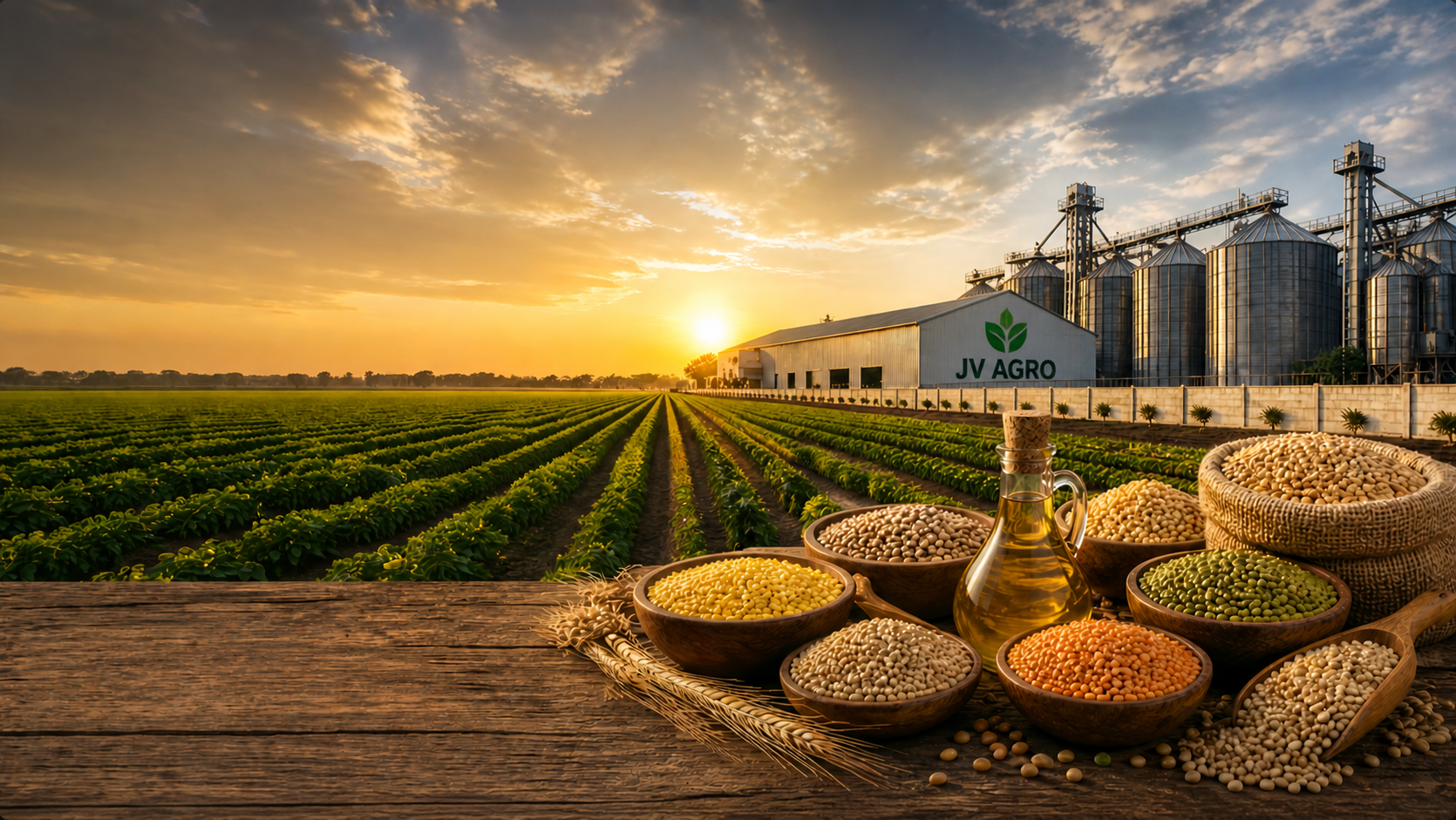
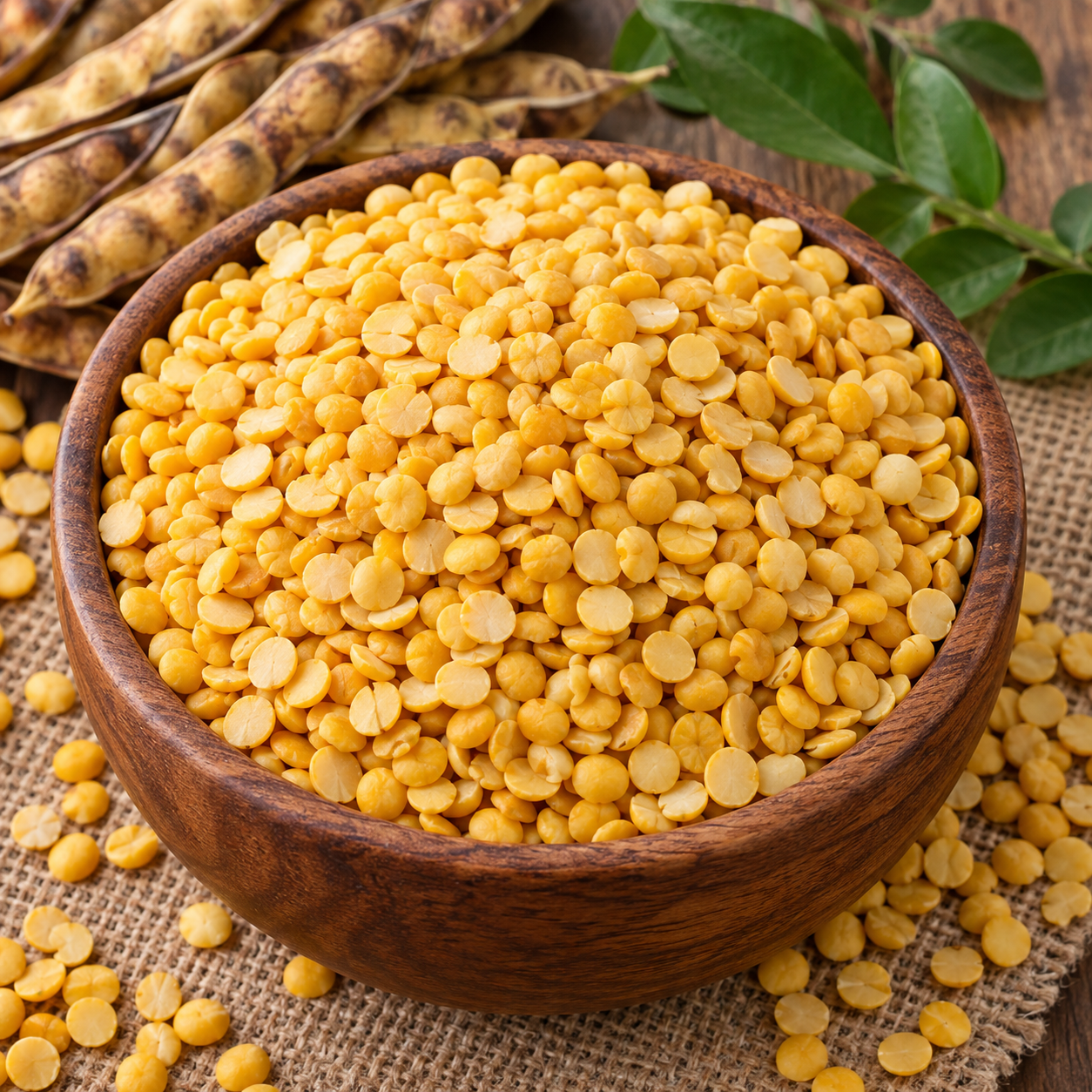
Vidarbha is where India's tur actually comes from. Our family has been cleaning, splitting and sorting it here since 1992 — five mills, around 350 tonnes a day, and largely the same people walking the floor who have walked it for twenty years.
A dal mill is a simple business. Doing it the same way every single day is the hard part.
Buy the right lot. Clean it properly. Split it without breaking it. Send it out on the day you said you would. That is the entire job.
Most of what goes wrong in this trade goes wrong because somebody skipped one of those four things to save a rupee, and the buyer found out two weeks later at the other end of a container. We have been on the receiving end of that ourselves, early on, and it is not a lesson you forget.
So we buy through the arrival season when the crop is at its best rather than scrambling when an order lands. We own the storage that lets us do it. We run our own mills instead of farming the work out to whoever has spare capacity. And when something is not right, you get a call from us before you get a surprise.
Second generation, same family, since 1992
Five owned units — nothing sub-contracted out
Located inside the growing belt, not at the consuming end
Own storage, so we buy on the crop, not on the order
Four names on the bag. One mill floor behind all of them.
A brand is only worth something if the thing inside it does not change. Ours come off the same lines, run by the same people, checked the same way. What changes between them is who they are packed for.
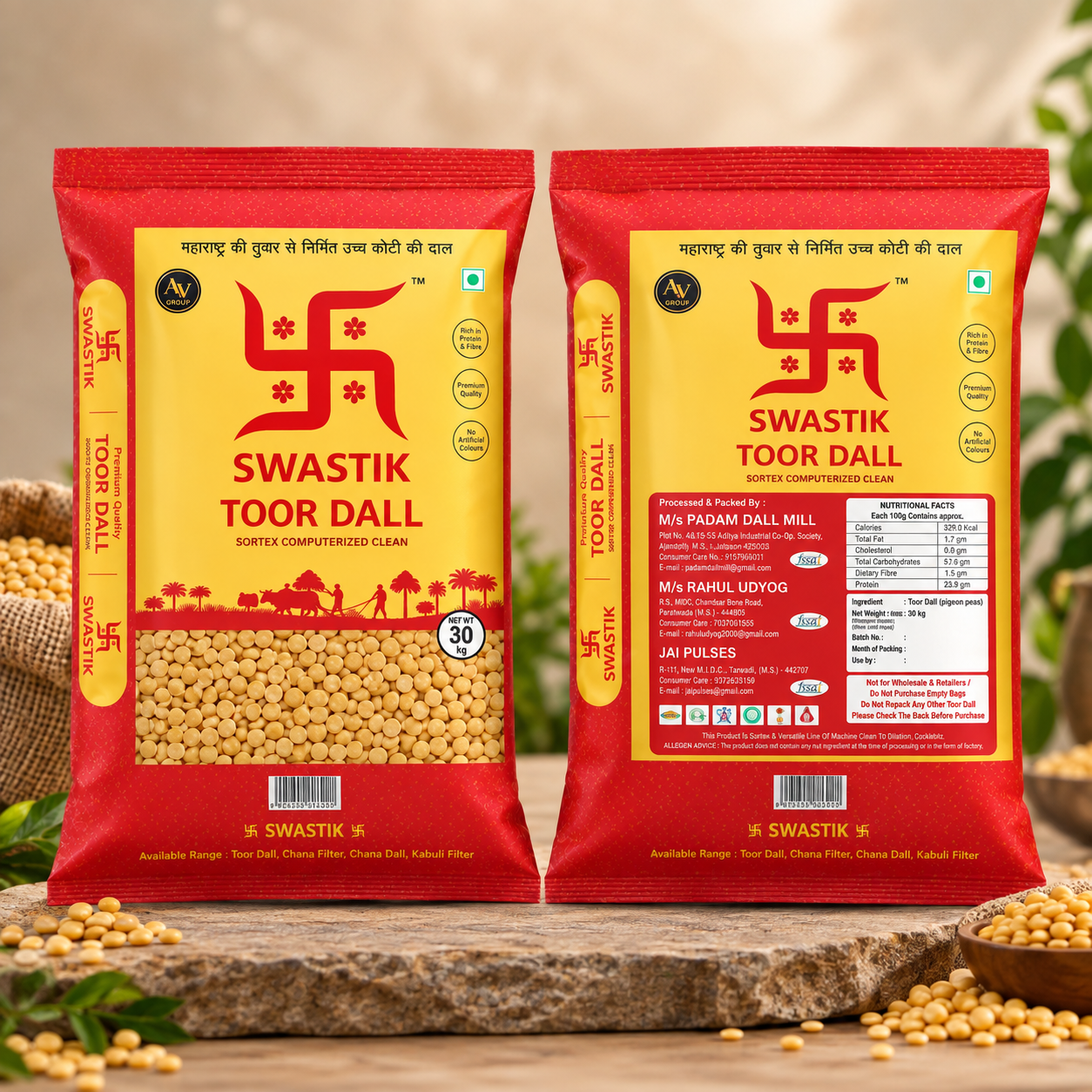
Swastik
Retail pulses for Indian kitchens
Swastik is the pack that goes into a home kitchen, so it gets the fussiest treatment we give any lot. Unpolished, uncoated, and sorted hard enough that a cook does not have to pick through it. The grain is what it looks like on the front of the bag — nothing added to make it shine.
Unpolished and uncoated — no water or oil polish
Colour-sorted to a uniform pack
Sold through grocery retail and modern trade
Packs 500 g · 1 kg · 2 kg · 5 kg Products Tur Dal, Chana Dal
Chetak
Bulk trade packs for wholesale and institutions
Chetak is the name our wholesale buyers know. It is built for movement — sturdy stitching, honest weight, and the same milling standard that goes into the retail packs. Distributors, mandi traders and institutional kitchens buy this one by the truckload.
30 kg and 50 kg woven sacks
Consistent lot-to-lot specification
Built for repeat wholesale offtake
Packs 30 kg · 50 kg Products Tur Dal, Chana Dal
JP
Chana Dal, milled at Yavatmal
JP is our chana line out of the Yavatmal unit, where the desi chana belt sits on our doorstep. Bold, evenly split dal with the husk properly removed and the fines screened out. Stocked mainly by regional distributors and catering supply.
Bold, evenly split chana dal
Husk removed, fines screened out
Milled at the Yavatmal unit
Packs 25 kg · 30 kg · 50 kg Products Chana Dal, Red Chana
Indu Pulses
The Yavatmal house mark
Indu Pulses is the mark on our Yavatmal MIDC output — the name printed on the bag alongside the licence, the pack date and the weight declaration. Buyers who have dealt with the Yavatmal unit for years still order by this name.
FSSAI licensed, fully declared packaging
Batch and pack month printed on every bag
Yavatmal MIDC unit
Packs 25 kg · 30 kg · 50 kg Products Chana Dal, Red Chana, Tur Dal
Seven steps. None of them clever. All of them checked.
01
Buying at the mandi
We buy through the arrival season from the markets around Paratwada and Yavatmal. Moisture, foreign matter and grain size are judged on the spot, before a rupee changes hands.
02
Intake and storage
Every lot is weighed, sampled and recorded on arrival, then stored by quality rather than tipped into one heap. That record is what lets us trace a bag back to a purchase months later.
03
Cleaning and destoning
Stone, mud, chaff, other-grain and metal come out first. Everything downstream depends on this step being done honestly, because nothing later removes a stone.
04
Milling and splitting
Husk off, grain split. Run it too fast and you make powder instead of dal, and powder is where everybody's margin goes. We run it at the speed the grain wants.
05
Sorting and calibration
Optical colour sorting for the dal, size calibration for kabuli chana. How tight we set the tolerance depends on what you are packing into — and we set it before the lot runs, not after.
06
Packing
25, 30 or 50 kilo sacks, your printed packs, or our own brands. Weight is checked on a calibrated scale and the pack is stitched to survive the journey it is actually going on.
07
Documentation and despatch
Invoice, packing list, certificate of analysis, and for export the phytosanitary certificate, certificate of origin and inspection report. Prepared in-house, so nothing waits on a third party.
Why buyers stay
What a miller can promise that a trader cannot.
Anyone can source a container of dal once. Getting the same thing again, six months later, is a different business entirely.
You are talking to the mill
There is no broker layer between you and the machine. When you ask why a lot looks the way it does, the person answering was standing next to it. And nothing gets quietly substituted from another mill when we are short, because we do not do that.
The second container matches the first
We write down the specification we agreed with you before the first lot runs, keep a retained sample, and check every lot after that against it. That is the entire reason to buy from a miller instead of from whoever has stock this week.
Your date holds in peak season
Three hundred and fifty tonnes a day and our own storage means there is headroom when arrivals surge and every mill in the district is full. Your despatch date does not slip because somebody else's order ran long.
Paperwork that clears
Export documentation is prepared in-house by people who have done it for years. Phytosanitary, certificate of origin, analysis, inspection. A container held at a port for a missing document costs more than it saves.
Somebody picks up the phone
A family business is small enough that a message reaches a person who can decide something. You will not be handed between four departments to find out when your truck is leaving.
We are where the crop is
Our units sit inside the tur and chana belt, not at the consuming end of it. Grain reaches us within hours of the mandi rather than after a week in transit, and that difference shows up in how it mills and how it keeps.
Where it goes
Fifteen countries, and the district next door.
Indu Lata Pulses Pvt. Ltd. is our APEDA-registered export arm, and it handles everything that leaves the country. But a large part of what we mill never leaves Maharashtra, and we take those loads as seriously as the containers.
Gulf
United Arab Emirates, Saudi Arabia, Oman, Kuwait, Qatar, Bahrain
Africa
Nigeria, Kenya, Tanzania
North America
United States, Canada
Subcontinent
Bangladesh, Nepal, Sri Lanka, and across India
The thing an importer is really buying is the confidence that the next container will look like the last one. Everything we do at the mill is aimed at that one sentence.
FSSAI, APEDA, IEC and ISO certified
Export documentation prepared in-house
Private label packing from 500 g to 50 kg
Trial quantities accepted on first orders
Straight answers
Questions buyers actually ask
If yours is not here, message us and we will answer it properly.
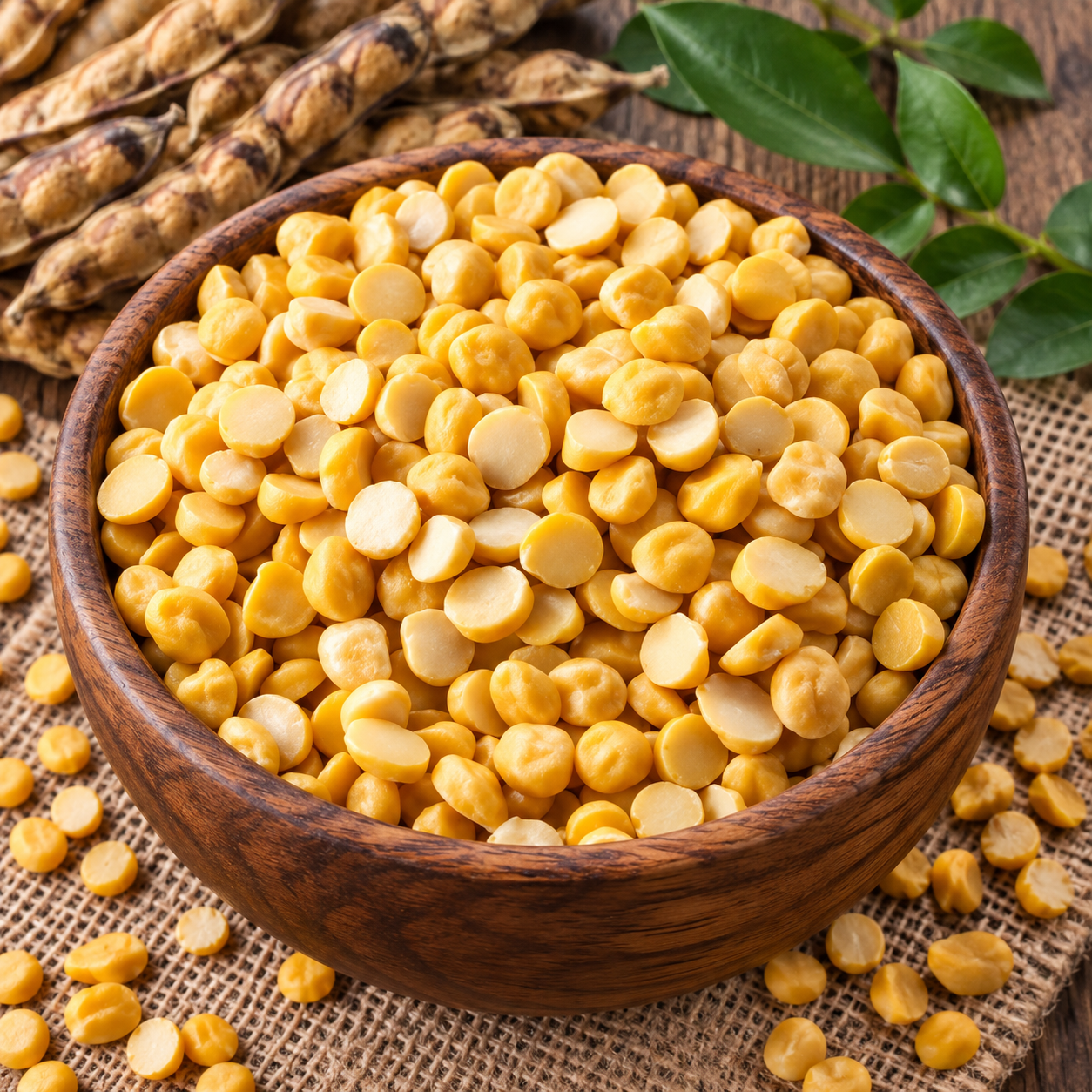
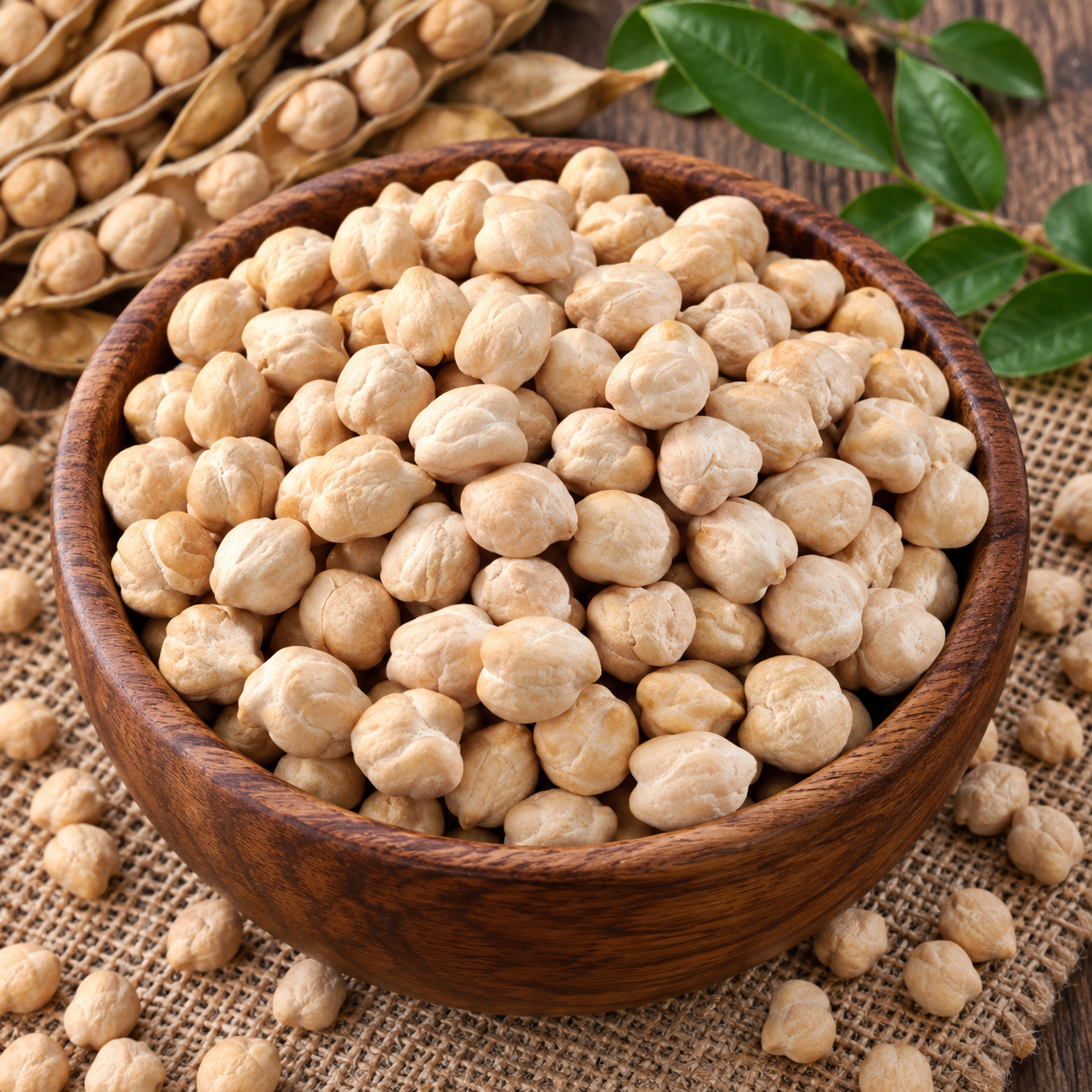
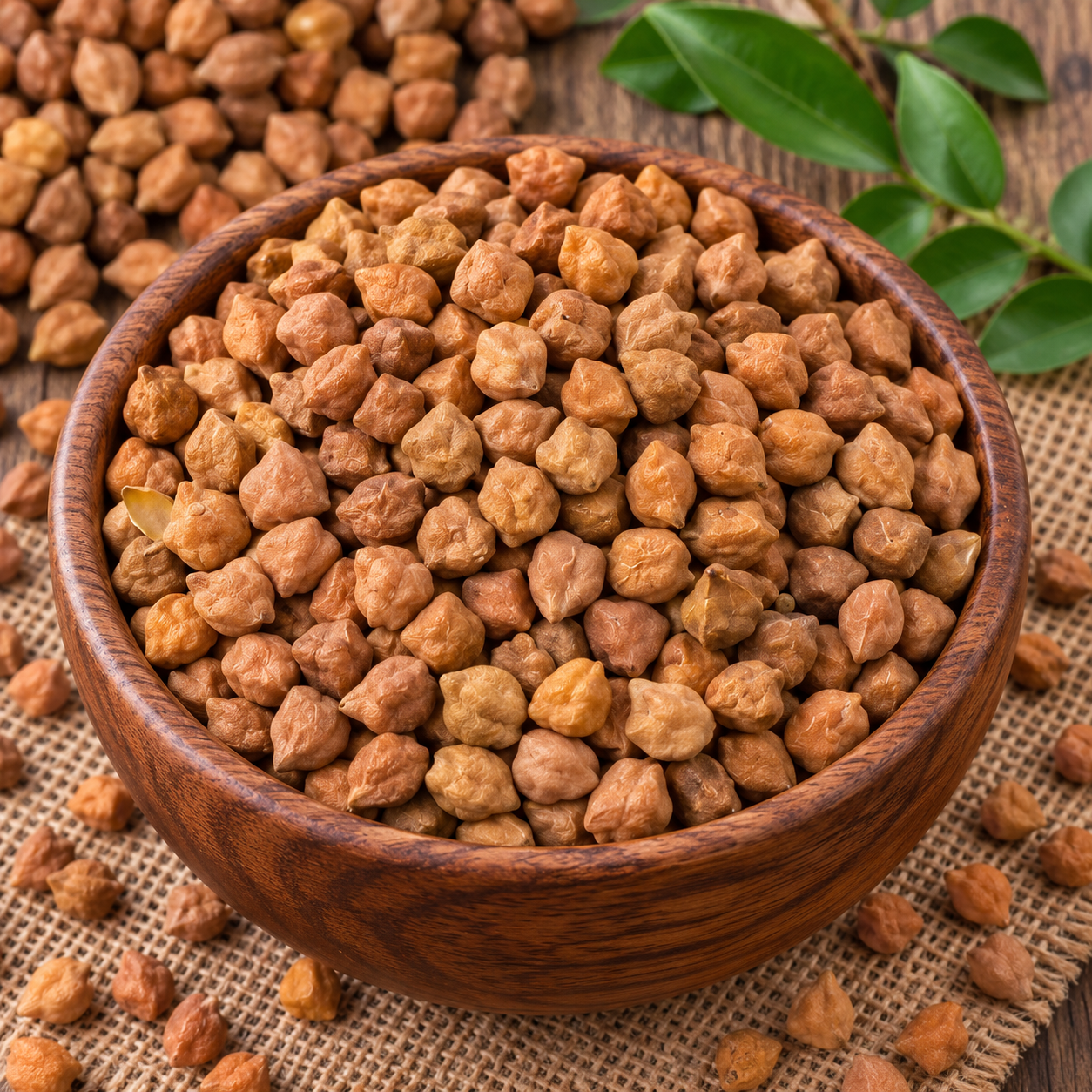
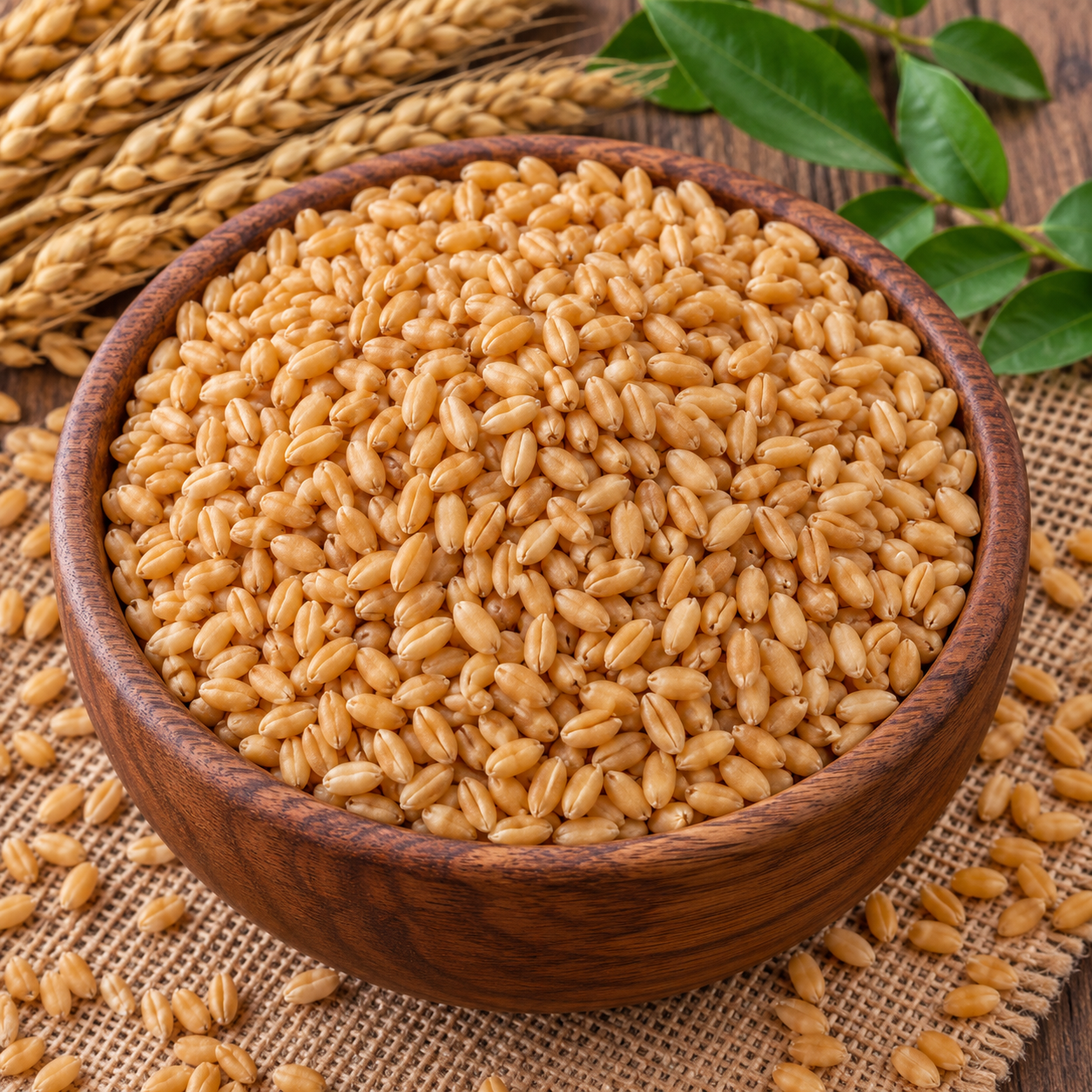
We are a pulse milling group in Vidarbha, Maharashtra. We buy tur, chana, kabuli chana, wheat and maize from the mandis around our units, clean and mill it in our own five factories, and sell it as bulk sacks, branded retail packs or private-label packing. We also crush and filter cottonseed. We have been doing this since 1992.
A manufacturer. We own and run five processing units across Amravati and Yavatmal districts with a combined capacity of roughly 350 tonnes a day of milling and 200 tonnes a day of oil filtering. Nothing is sub-contracted to another mill, which is the reason our second container matches our first.
For domestic trade, one full truck. For export, one 20-foot container. We take smaller trial quantities on a first order, because we would rather you test us on a small lot than take a large one on faith.
Yes, and a large part of what we do is exactly that. Send us your artwork and we will pack it in your printed HDPE, BOPP or laminated packs in sizes from 500 grams to 50 kilos. We also run four brands of our own if you would rather stock something ready.
The Gulf — UAE, Saudi Arabia, Oman, Kuwait, Qatar and Bahrain. Africa — Nigeria, Kenya and Tanzania. North America — the United States and Canada. And the subcontinent — Bangladesh, Nepal and Sri Lanka. Indu Lata Pulses Pvt. Ltd. is our APEDA-registered export arm.
FSSAI licences on our food units, APEDA registration for agricultural export, an Importer Exporter Code, and ISO certification. Phytosanitary certificates, certificates of origin and third-party inspection are arranged per shipment as the destination requires.
You tell us what you are packing into and where it is going, and we set the cleaning, sorting and moisture to suit. A retail pouch sitting under shop lights needs a tighter colour tolerance than a catering sack. We write the agreed specification down before the first lot runs, and every lot after that is checked against it.
Yes. We courier sealed samples drawn from the actual lot, with the analysis for that lot attached. For export buyers we can also arrange third-party inspection at loading.
Domestic loads generally move within two to four working days of confirmation. Export containers depend on documentation and vessel schedule, usually seven to twelve days from confirmed order. During peak arrival season we hold enough capacity and storage that your date does not slip because someone else's order ran long.
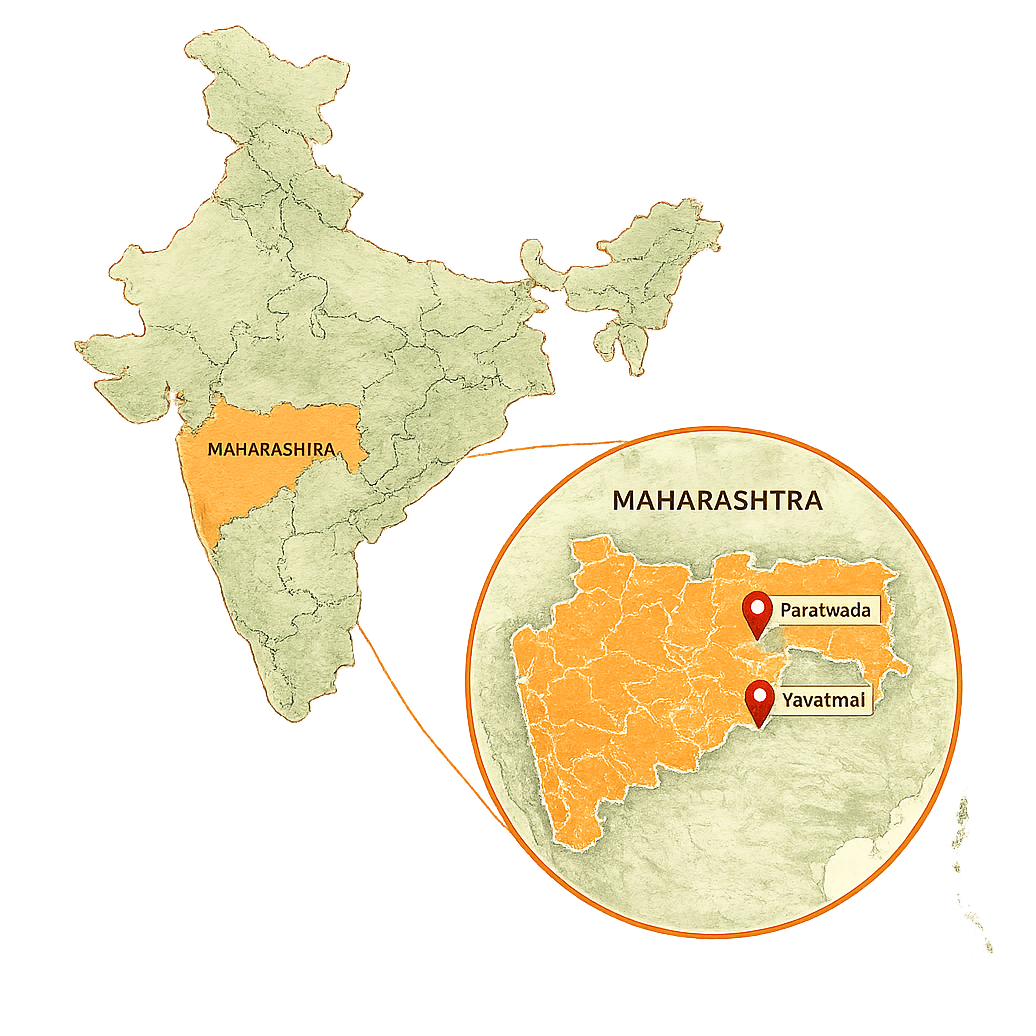
Our head office is at Jai-Vijay Office, Opposite Bhansali School, Kandli Road, Paratwada 444805, Amravati District, Maharashtra. Our second cluster of units is in Yavatmal District. Both sit inside the tur and chana growing belt, which is the whole point.
Talk to us
Tell us what you need. We will come back with a number, not a brochure.
Product, quantity, packing, destination. Four things and we can quote you properly.