Process
How dal is made: inside a dal mill, step by step
From mandi tur to split yellow dal, in eight steps.
Key takeaways
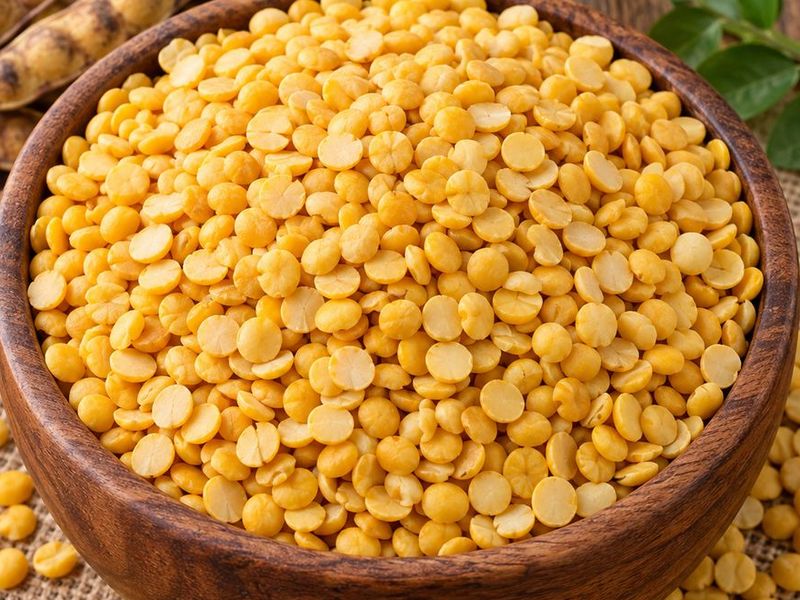
- Dal is the pulse with its husk removed and the seed split into two halves.
- The hard part is loosening the husk without breaking the grain.
- In a well-run tur mill, roughly 70 to 75% of the raw grain becomes dal, depending on the crop.
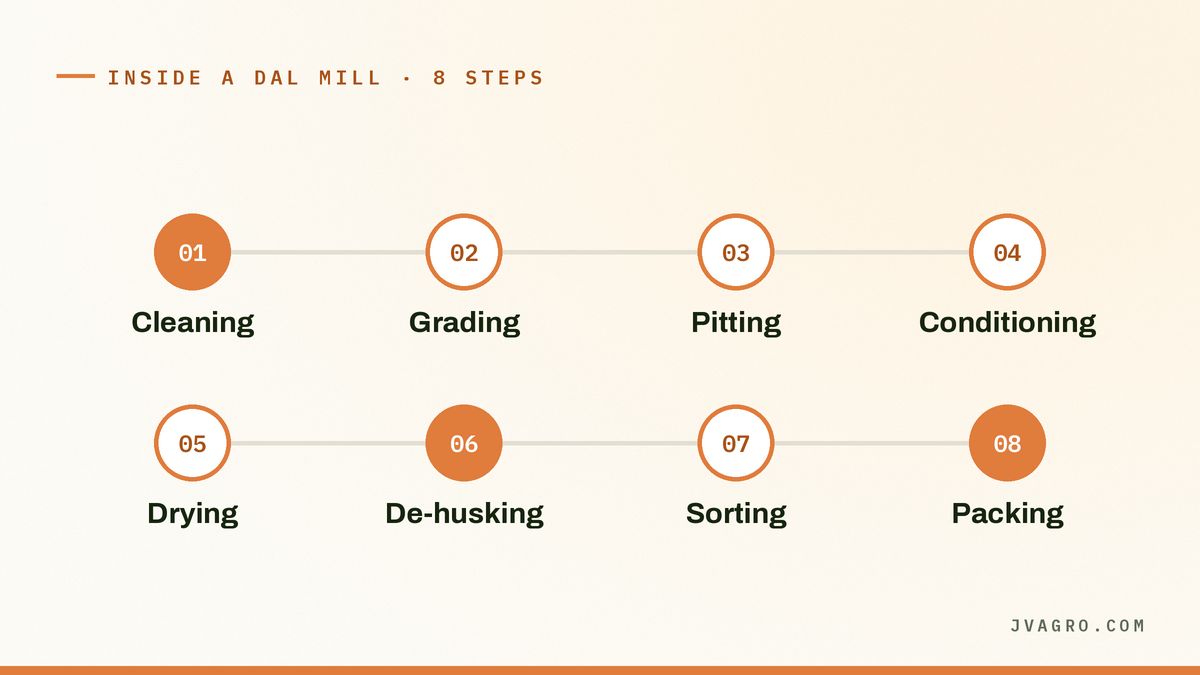
- CleaningSieves, aspirators, destoners and magnets remove dust, straw, stones and metal.
- GradingThe grain is sorted by size so each batch de-husks evenly.
- PittingLight abrasion scratches the seed coat so oil or water can get in.
- ConditioningAn oil or water treatment loosens the husk; the grain then rests.
- DryingSun or mechanical drying brings moisture down so the husk cracks off cleanly.
- De-husking & splittingRollers rub off the husk and split the seed into two halves.
- SortingSieves remove powder and broken bits; optical colour sorters reject off-colour grains.
- Finishing & packingLeft unpolished or given a water or oil polish, then weighed, packed and lot-coded.
Where the rest goes
Husk, powder and broken pieces, sold together as chuni, go to cattle feed. Nothing leaves the mill as waste.
Wet and dry milling
The traditional wet method soaks the grain and sun-dries it over days. The dry method uses oil conditioning and mechanical dryers, and runs year-round regardless of weather. Most modern mills use the dry method, or a mix of the two.
Quick answers
The by-product of dal milling: husk, powder and broken pieces. It is sold as cattle feed.
It is an optical colour sorter. Cameras check each grain as it falls and air jets reject discoloured grains, stones and foreign matter. 'Sortex' is a brand name now used for the machine type.
Buying or packing pulses? Tell us the product, quantity and destination and we will come back with a number.