Nutrition
Toor dal benefits: protein, fibre, iron and folate per 100 g
Toor dal is the everyday protein of a large part of India. Here is what is actually in it, per 100 grams and per bowl, and how to get the most out of it.
Key takeaways
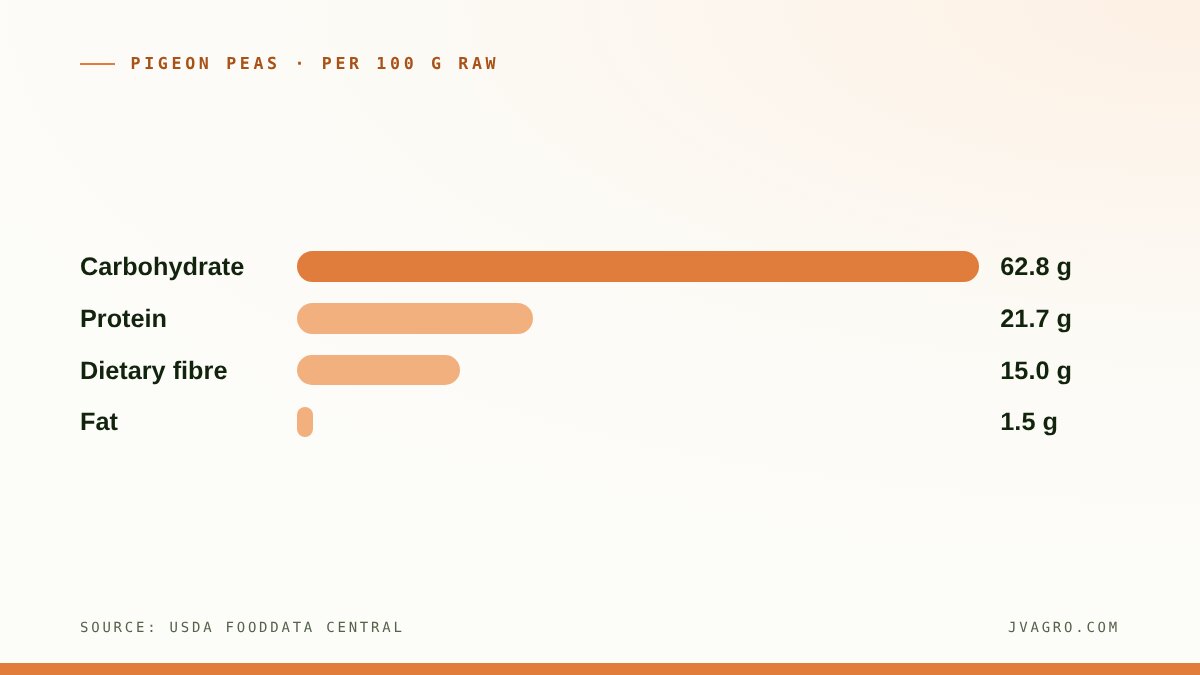
- 100 g of raw pigeon peas contain about 21.7 g protein, 15 g dietary fibre, 5.2 mg iron and 456 µg folate.
- Cooked, toor dal is mostly water: about 6.8 g protein per 100 g of boiled pigeon peas.
- A typical katori of dal made from 30 g of dry toor dal gives roughly 6 to 7 g of protein.
- Pair dal with rice or roti: cereals and pulses complement each other's amino acids.
Toor dal (tur, arhar, pigeon pea) is eaten daily in Maharashtra, Karnataka, Gujarat and across South India. It is a cheap, reliable source of plant protein and fibre. The numbers below are for whole mature pigeon peas from the USDA database; de-husked dal has a little less fibre and is otherwise similar.
Nutrition per 100 g
| Nutrient | Raw, per 100 g | Boiled, per 100 g |
|---|---|---|
| Energy | 343 kcal | 121 kcal |
| Protein | 21.7 g | 6.8 g |
| Carbohydrate | 62.8 g | 23.3 g |
| Dietary fibre | 15.0 g | 6.7 g |
| Fat | 1.5 g | 0.4 g |
| Iron | 5.2 mg | 1.1 mg |
| Folate | 456 µg | 111 µg |
| Potassium | 1,392 mg | 384 mg |
Source: USDA FoodData Central, SR Legacy, pigeon peas (red gram), mature seeds, raw and boiled without salt. De-husked split dal has less fibre than whole seeds. Values vary by variety and growing conditions.
What a bowl of dal actually gives you
Most home cooks use about 30 to 40 g of dry dal per person per meal. At 21.7 g protein per 100 g dry, 30 g of toor dal gives about 6.5 g of protein. That is a useful share of a meal, but dal alone is not a high-protein food in the way paneer, eggs or soya chunks are. Its strength is that it is eaten every day.
Why dal and rice work together
Pulses are relatively rich in the amino acid lysine and lower in methionine; cereals are the opposite. Eaten together, as dal-chawal or dal-roti, they complement each other and give a more complete protein. This is one reason the combination has lasted for centuries.
Fibre and fullness
Toor dal is rich in fibre, which slows digestion and helps you feel full. That is part of why a dal-based meal satisfies on modest calories.
Iron and folate
Toor dal provides useful iron and folate. Plant iron is absorbed less easily than iron from meat. A squeeze of lemon, tomatoes, or another vitamin C source in the same meal helps absorption. Tea or coffee right after a meal can reduce it.
Getting the most out of toor dal
- Prefer unpolished: polishing is cosmetic and adds nothing nutritionally.
- Soak before cooking: shortens cooking time and makes dal easier to digest for many people.
- Do not overboil the tadka: spices and ghee add flavour; the nutrition is in the dal.
- Eat it with vegetables: sambar, dal palak and dal with lauki add vitamins and fibre.
These are general nutrition facts. If you have a medical condition such as kidney disease or are on a special diet, ask your doctor or a registered dietitian how much dal is right for you.
Quick answers
About 21.7 g in 100 g of raw pigeon peas, per USDA data. Cooked, 100 g of boiled pigeon peas has about 6.8 g of protein.
For most people, yes. It is a staple source of plant protein, fibre, iron and folate, and pairs well with rice or roti.
Polishing is a cosmetic step. Unpolished dal carries no added oil or coating; the core nutrition of the dal is similar.
Sources
Unpolished toor dal, straight from the mill Swastik toor dal is unpolished and packed at our own mill in Vidarbha.