
Kitchen
Why dal causes gas, and seven kitchen habits that help
Pulses contain natural sugars that gut bacteria ferment, which is why some people feel bloated after dal. The good news is that old kitchen habits, many of them centuries old, really do help.
Key takeaways
- Pulses contain raffinose-family oligosaccharides, sugars our gut cannot digest. Gut bacteria ferment them, producing gas.
- Soaking and discarding the soaking water reduces some of these sugars.
- Cooking thoroughly, skimming foam and tempering with hing, ginger, jeera or ajwain are traditional habits that help many people.
- If you eat dal rarely, start with smaller portions; the gut often adapts with regular eating.
Dal is one of the healthiest foods in the Indian kitchen, and for most people it causes no trouble at all. But for some, especially with whole pulses like chickpeas and rajma, it brings gas and bloating. Here is why, and what helps.
Why pulses cause gas
Pulses contain a group of sugars called raffinose-family oligosaccharides, including raffinose and stachyose. Humans lack the enzyme to break them down in the small intestine. They travel to the large intestine, where bacteria ferment them and produce gas. Pulses are also high in fibre, which is fermented in the same way. This is normal digestion, not a sign that anything is wrong.
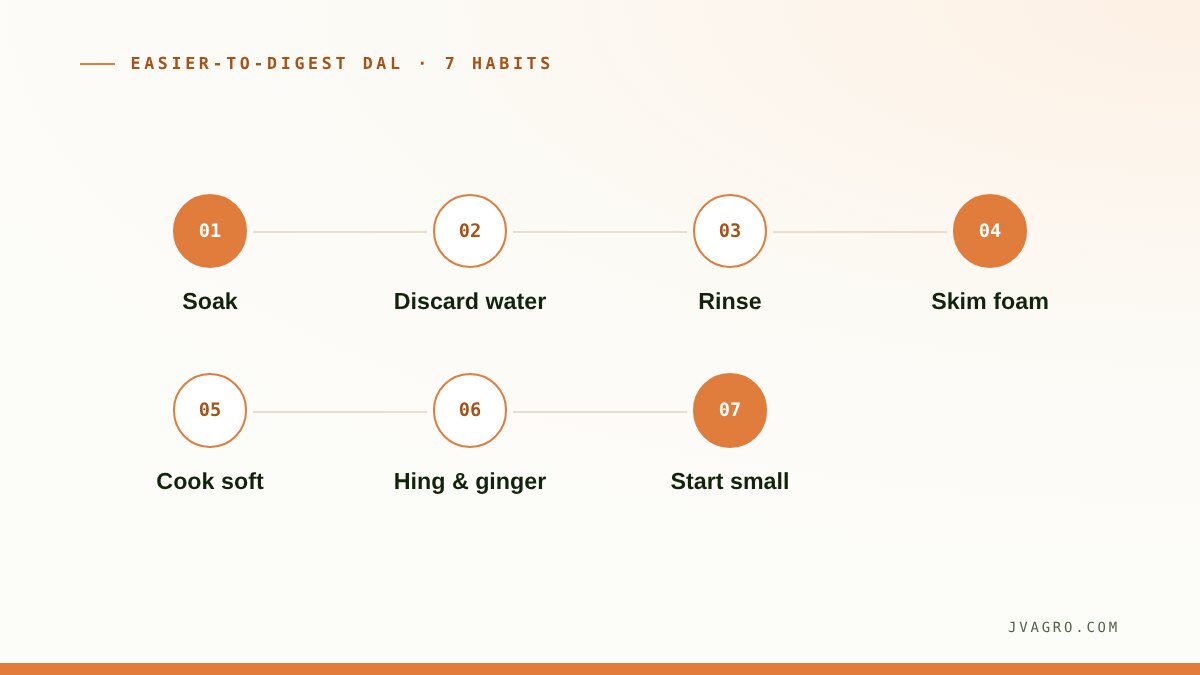
Seven kitchen habits that help
- Soak before cookingSoak whole pulses overnight and dals for 20 minutes to 2 hours. Some of the oligosaccharides dissolve into the water.
- Discard the soaking waterThrow away the water you soaked them in and cook in fresh water.
- Rinse wellRinse dal in several changes of water until it runs clear.
- Skim the foamThe foam that rises when you boil pulses can be skimmed off before closing the cooker.
- Cook until softUndercooked pulses are harder to digest. Dal should collapse when pressed.
- Temper with hing, ginger, jeera or ajwainIndian kitchens have tempered dal with asafoetida, ginger, cumin and carom seeds for centuries, precisely for easier digestion. Many people find they help.
- Start small and eat regularlyIf you rarely eat pulses, start with smaller portions. Gut bacteria often adapt to regular intake and symptoms ease.
Which dals are easiest
Split, de-husked dals are generally easier than whole pulses. Moong dal has a reputation as the lightest. Toor and masoor are in between. Whole chickpeas, rajma and whole urad are usually the heaviest.
Old dal cooks harder
Dal that is old or stored in damp conditions takes longer to cook and often never softens fully. Under-softened dal is harder on the stomach. Buy fresh stock in quantities you will finish in two to three months, and store it dry and airtight.
If bloating is severe, painful, frequent or comes with other symptoms such as weight loss or a change in bowel habits, see a doctor. This article is general kitchen advice, not medical advice.
Quick answers
Pulses contain oligosaccharides that the small intestine cannot digest. Bacteria in the large intestine ferment them, which produces gas. Fibre is fermented in a similar way.
Split, de-husked dals such as moong dal are usually the easiest to digest. Whole pulses like chickpeas and rajma tend to cause more gas.
Soaking and discarding the soaking water reduces some of the gas-causing sugars and helps dal cook softer, which many people find helps.
Fresh dal cooks softer and digests easier Swastik dal is milled and packed at our own mill, with the pack month on every bag.