Market
Tur imports stay duty-free until March 2027: what it means for prices
Why one DGFT notification matters to every tur dal rate in the country.
Key takeaways
- DGFT Notification 72/2025-26 (31 March 2026) keeps tur, HS 0713 60 00, free to import until 31 March 2027.
- Urad's duty-free window runs to the same date. Yellow peas still carry import duty.
- Imported tur sets a ceiling on domestic prices whenever its landed cost is lower.
India imported a record 12.33 lakh tonnes of tur in 2024. Most of it comes from Myanmar and East Africa, especially Mozambique, Malawi and Tanzania, much of it in the months before India's own harvest.
How imports cap the price
Domestic and imported tur are one market with two sources. When the landed cost of imported grain falls below the mandi rate, mills switch, and the domestic price stops rising. With duty-free access locked in for another year, that ceiling stays in place.
Rule of thumb: compare the mandi rate with the landed cost of imported tur at the nearest port, not with last month's mandi rate.
What it means for farmers and buyers
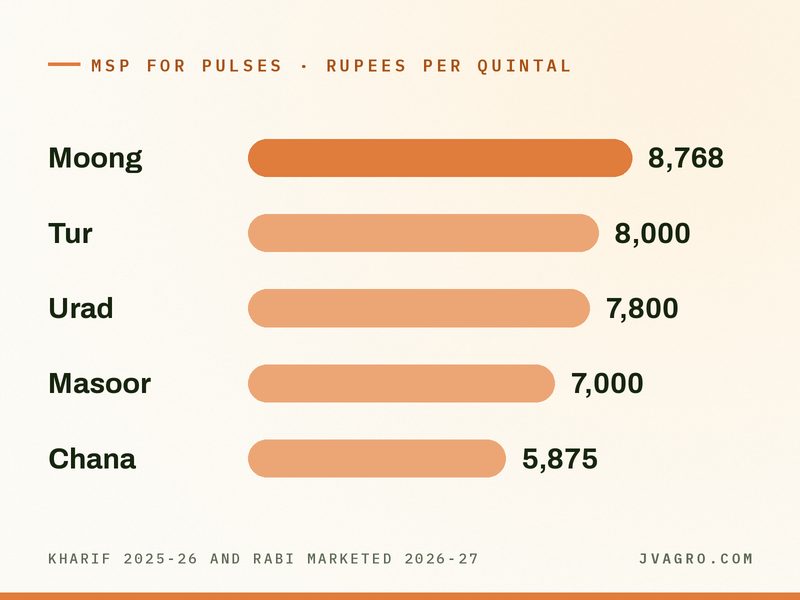
- FarmersThe MSP of ₹8,000 a quintal and assured procurement of tur set the floor; imports limit how far above it the market can run.
- Mills and buyersDecember to February, when Indian arrivals peak, usually offers the best combination of quality and price for the year's contracts.
- RetailDuty-free imports damp the sharp spikes of a bad monsoon year, which keeps shelf prices steadier.
Quick answers
Yes. DGFT Notification 72/2025-26 dated 31 March 2026 keeps import of tur (pigeon peas, HS 0713 60 00) in the 'Free' category until 31 March 2027.
Mainly Myanmar and East African countries such as Mozambique, Malawi and Tanzania.
0713 60 00, pigeon peas (Cajanus cajan), whether or not skinned or split.
Sources
Buying or packing pulses? Tell us the product, quantity and destination and we will come back with a number.