
Buying
Yellow maize specifications for poultry feed, cattle feed and starch buyers
Maize is bought on specification. Moisture and aflatoxin decide most rejections. Here is what feed mills and starch plants check, and how to write a maize contract that avoids disputes.
Key takeaways
- Moisture is the first check: wet maize heats and moulds in transit. Many buyers specify 14% or below.
- Aflatoxin is the most serious risk for feed. Many poultry feed buyers specify 20 µg/kg (ppb) or below; check your contract.
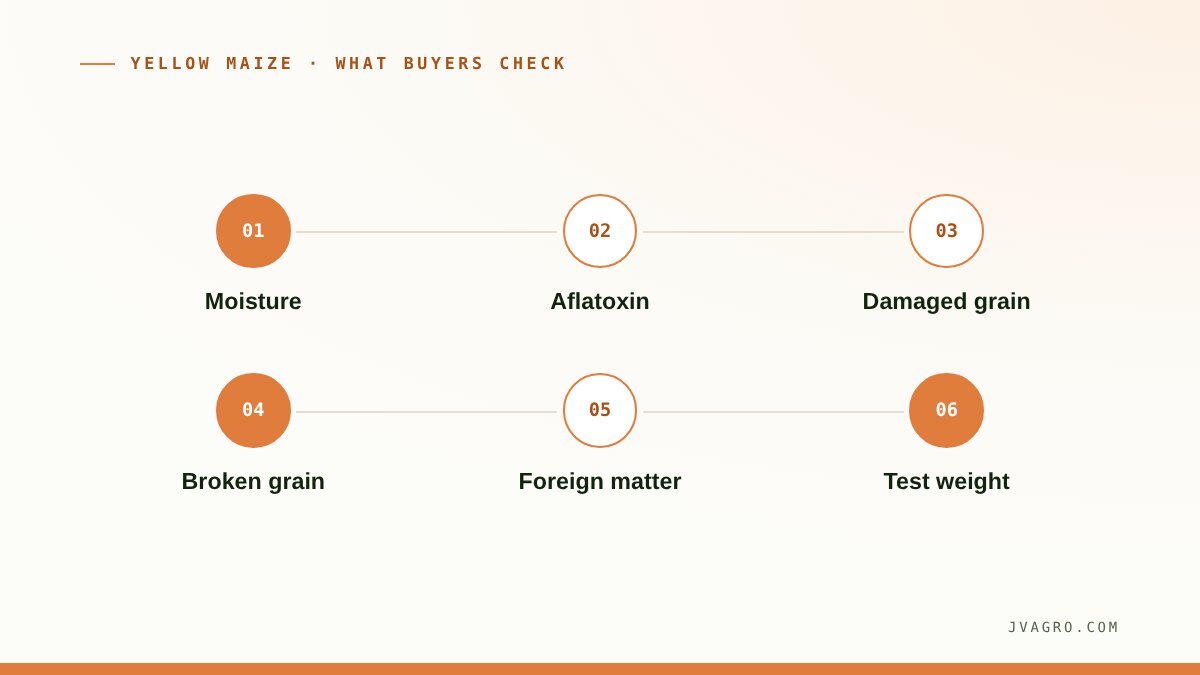
- Damaged, broken and fungus-affected grain, foreign matter and test weight complete the picture.
- Maize MSP for 2026-27 is ₹2,410 a quintal, but demand from feed, starch and ethanol sets the market.
India's maize is used mostly for poultry feed, followed by starch, cattle feed, food and increasingly ethanol. Each buyer has a specification, and the specification decides the price. A lot that meets it sells easily. A lot that does not becomes a dispute.
The specification, line by line
| Parameter | What buyers commonly ask for | Why it matters |
|---|---|---|
| Moisture | 14% or below | Wet maize heats, moulds and loses weight |
| Aflatoxin B1 | Often 20 µg/kg or below for poultry feed | Toxic to birds and animals; harms growth |
| Damaged and discoloured grain | Low single digits | Indicates mould, heat or insect damage |
| Broken grain | Limited | Brokens mould faster and reduce starch yield |
| Foreign matter | Around 1% or below | Stones, cobs, dust, other seeds |
| Test weight | Higher is better | Indicates well-filled, dense grain |
| Colour | Uniform yellow to orange | Pigment matters for poultry skin and yolk colour |
Indicative ranges based on common trade practice. BIS standards for poultry and cattle feed and the buyer's own specification govern a contract. FSSAI sets separate limits for maize used as food.
Moisture: the most common reason for claims
Maize harvested in the kharif season often comes in wet. If it is loaded without drying, it can heat in the truck and arrive with mould. Good suppliers dry maize, by sun or dryer, before despatch, and send the moisture reading with the invoice.
Aflatoxin: the hidden risk
Aflatoxins are produced by moulds, mainly Aspergillus flavus, that grow on maize in warm, humid conditions, in the field or in storage. They cannot be seen. Poultry are especially sensitive. Feed mills test incoming lots with rapid strip tests or laboratory methods. Avoiding aflatoxin starts with drying fast and storing dry.
Starch plants check slightly different things
Starch plants care about starch content and how easily the grain wet-mills. They prefer sound, mature grain with few brokens and little damage, because damaged grain yields less starch and more by-products.
What drives maize prices
- Feed demand, led by the poultry industry.
- Ethanol distilleries, which have become large buyers of maize.
- Starch demand from food, textile and paper industries.
- The kharif crop size and the smaller rabi crop from Bihar and southern states.
MSP for 2026-27 is ₹2,410 a quintal, up only ₹10. Market prices have generally been set by demand, not by MSP.
Writing a maize contract that avoids disputes
- Write the specification with numbers, not words like "good quality".
- Name the test method and the laboratory for disputes.
- Agree a discount scale for moisture or damage above the limit, instead of outright rejection.
- Draw joint samples at loading and keep them sealed.
Quick answers
Many feed mills specify 14% or below. The exact figure should be written in the contract.
Many poultry feed buyers specify aflatoxin B1 of 20 µg/kg (ppb) or below. Check the buyer's specification and applicable BIS standard.
₹2,410 per quintal for the 2026-27 kharif marketing season.
Sources
Buying yellow maize by the truck? Dried and cleaned yellow maize from Vidarbha for feed mills and starch plants.