Feed
Cottonseed cake price: what drives the sarki and khal rate every season
Dairy farmers and feed traders watch the price of cottonseed cake every week. It follows cotton, but not only cotton. Here is the full set of forces, season by season.
Key takeaways
- Cottonseed cake (sarki, binola khal, kapas khali) is made by expelling oil from cottonseed. Its price starts with the price of cottonseed.
- Cotton arrivals from October to March bring the most seed and usually the easiest cake prices.
- Oil prices matter too: when cottonseed oil sells well, mills crush more and cake supply rises.
- Dairy demand peaks when green fodder is short, usually in summer.
Cottonseed cake is one of the most widely used protein feeds for dairy cattle and buffaloes in central and western India. It is made in the same belts where cotton is grown, and Vidarbha is one of the biggest. Its price can move sharply within a season, and understanding why helps any dairy or feed business buy better.
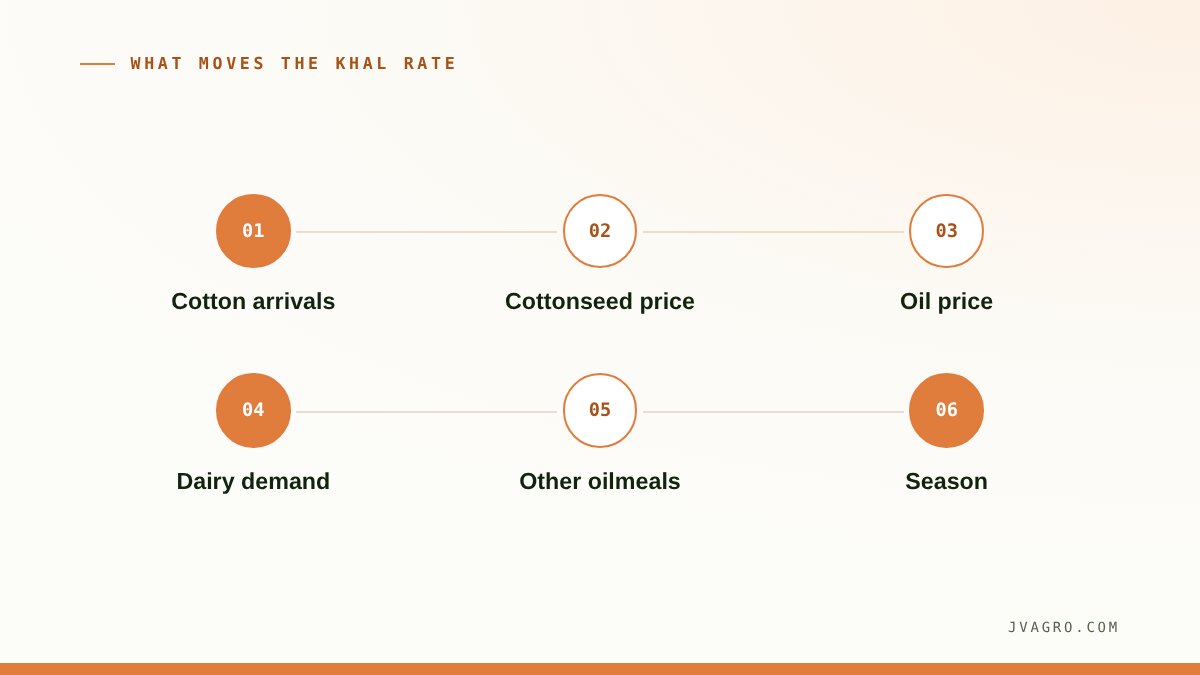
1. Cotton arrivals and cottonseed supply
Seed cotton (kapas) is picked from October and arrives in heavy volumes through winter. Ginners separate lint from seed, and the seed goes to oil mills. More cotton arrivals mean more cottonseed and more cake. That is why cake is often easiest to buy in winter and firmest in late summer and the monsoon, when seed stocks run down.
2. The cottonseed price
The cake price follows the price of seed. Cotton MSP for 2026-27 rose ₹557 to ₹8,267 a quintal for medium staple. When kapas prices are supported, seed prices tend to firm too, and cake follows.
3. The oil price
A mill earns from both oil and cake. When cottonseed oil sells at a good price, mills can afford to sell cake cheaper and still make money. When oil is weak, the cake has to carry more of the cost and its price rises.
4. Dairy demand
Demand for cake is seasonal. It rises when green fodder is scarce, typically in summer, and during the flush season when farmers push for milk yield. Rising milk prices also encourage farmers to feed more concentrate.
5. Other oilmeals and feeds
Cake competes with soybean meal, groundnut cake, mustard cake, maize and compound cattle feed. When soybean meal or other feeds are expensive, demand shifts to cottonseed cake. The trade also watches exchange-traded cottonseed oilcake prices, with Akola in Vidarbha as a key reference market.
6. Freight and distance
Cake is bulky and relatively cheap per kilo, so freight is a large share of the delivered price. Buying from a mill close to your dairy belt often matters more than a small difference in the ex-mill rate.
| Months | Seed supply | Typical price pressure |
|---|---|---|
| October – January | Rising with cotton arrivals | Easier |
| February – April | Still good | Stable |
| May – September | Declining stocks, high dairy demand | Firmer |
How to buy well
- Buy fresh: old cake can go rancid and pick up mould. Check smell and colour.
- Check for mould: grey or green patches and a musty smell are warning signs.
- Store dry: on pallets, off the floor, in a ventilated shed.
- Agree quality and delivery terms in writing, including moisture and foreign matter.
For feeding advice, read our guide to cottonseed cake for dairy cattle.
Quick answers
It changes with cottonseed and oil prices, the season and freight. Message us for today's ex-mill and delivered rate.
Usually in winter, from October to January, when cotton arrivals bring the most cottonseed to oil mills.
Both are local names for cottonseed cake, the protein-rich feed left after oil is pressed out of cottonseed.
Sources
Buying cottonseed cake for a dairy or feed business? Fresh cottonseed cake from our Vidarbha unit, by the bag or the truck.